
Few driving situations are more stressful than pressing down on the gas pedal and getting absolutely no response. When a car has no power at all, it isn't just a minor mechanical hiccup—it is a critical failure that prevents the vehicle from accelerating, keeping up with traffic, or moving from a dead stop.
Understanding why your vehicle has completely lost momentum is essential for staying safe on the road and avoiding catastrophic damage to your engine or transmission.
Contact Hansma Automotive and book an appointment today if your car has no power at all.
Key Takeaways
Engine vs. Transmission: If the engine won't rev, look toward fuel, electrical systems, or Limp Mode. If the engine revs but the car won't move, it is an explicit transmission failure.
Limp Mode is a Shield: When Limp Mode locks your speed, the car is actively trying to prevent a total engine blowout.
Do Not Cruise: A vehicle with zero acceleration is an immediate safety hazard to you and everyone else on the roadway.
Check the Dashboard: A flashing check engine light or a transmission temperature warning confirms that catastrophic internal damage is imminent if you keep driving.
1. What Total Power Loss Feels Like
A total lack of power goes beyond a minor engine stutter. It usually manifests in one of three ways:
The Dead Pedal: You step on the accelerator, but the pedal feels completely unresponsive. The engine doesn't rev, and the vehicle refuses to speed up.
High Revs, No Movement: The engine roars and the tachometer needle climbs, but the vehicle coasts or moves at a literal crawl.
Sudden Deceleration: While driving at normal speeds, the vehicle rapidly drops velocity and will not pick up speed again, forcing you toward the shoulder.

2. Major Causes When a Car Has No Power At All
1. Total Fuel Pump Failure
An engine needs a continuous, high-pressure stream of fuel to run. If the fuel pump suffers a complete mechanical or electrical failure, the delivery of gasoline stops instantly. Without fuel hitting the cylinders, combustion cannot occur, causing the vehicle to immediately lose all acceleration before stalling out entirely.
2. Sudden Transmission Failure
If your engine is revving loudly but the car won't budge, the breakdown lies within the transmission. A snapped clutch, a broken torque converter, or a catastrophic internal fluid pressure loss means the mechanical energy generated by the engine cannot physically transfer to your wheels.
3. Electrical and Sensor Blackouts
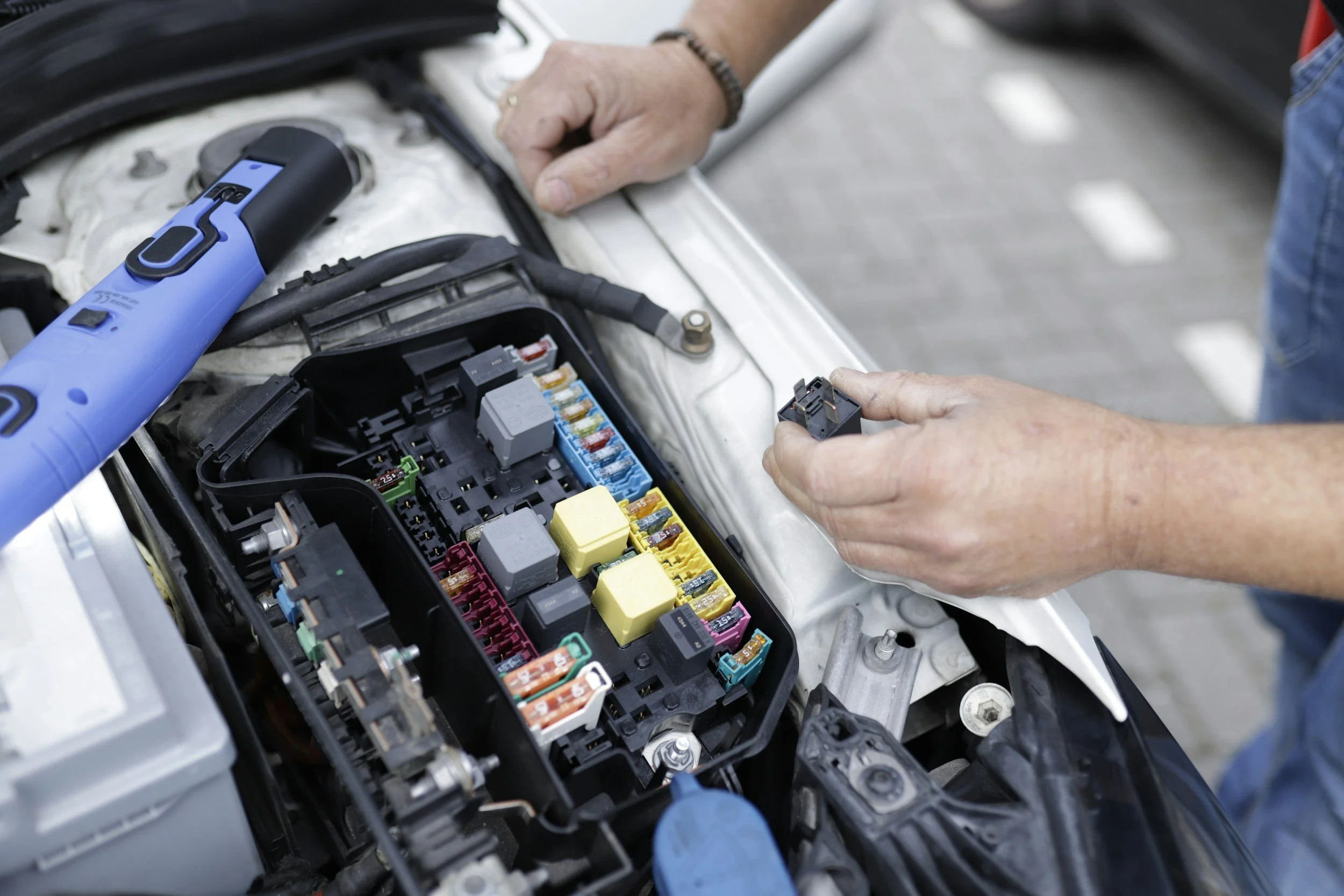
Modern vehicles rely on an intricate electrical network to manage engine timing and throttle control.
Electronic Throttle Control (ETC) Failure: Many modern cars use "drive-by-wire" systems. If the sensor connecting your pedal to the throttle body fails, the engine computer has no idea you are stepping on the gas.
Alternator Failures: If your alternator stops charging the system, the vehicle will run purely on battery juice until it drains completely, causing a total shutdown of all engine management computers.
4. Limp Mode Activation
"Limp Mode" (or emergency fail-safe mode) is a protective software state triggered by the engine computer when it detects a severe mechanical anomaly. To save the engine from destroying itself, the car's computer intentionally cuts engine power, disables turbochargers, and locks the transmission into a single low gear. This allows you to "limp" safely to the side of the road, but eliminates normal acceleration.
3. The Safety Hazards of Driving with Zero Power
Attempting to push through a total power loss is incredibly dangerous. Operating a vehicle that cannot accelerate safely presents immediate risks:
The Rear-End Collision Hazard: If your vehicle suddenly drops speed on a high-speed roadway, drivers behind you will not expect the sudden deceleration, significantly increasing the likelihood of a high-impact rear-end crash.
Loss of Power Steering and Brakes: If the power loss causes the engine to stall completely while you are moving, you will lose your power steering assist and brake vacuum assist. The steering wheel will become incredibly heavy, and the brakes will require extreme physical force to slow the car down.
Stalling in Intersections: Lacking the power to clear a busy intersection leaves you stranded directly in the path of oncoming traffic.
The Final Verdict: Pull Over and Call a Professional
When a car has no power at all, your priority shifts entirely from completing your trip to safely exiting the roadway.
Do not attempt to drive the vehicle home or to a shop. Continuing to force an unpowered vehicle forward can permanently ruin an automatic transmission, crack an engine block, or cause an unexpected, dangerous highway stall.
Safely navigate to the closest shoulder or parking lot.
Turn on your hazard lights.
Shut off the engine immediately.
Call a tow truck to bring the vehicle to a certified mechanic for a full professional diagnostics test.
An expert diagnostic tool can pull the error codes directly from the vehicle’s control modules, pinpointing exactly which system went dark so your vehicle can be safely repaired and returned to the road.

Car Has No Power At All? Call Hansma Automotive
Don’t compromise your safety or risk catastrophic engine damage by ignoring a total loss of power. When your car refuses to accelerate or move, it is telling you that something is critically wrong under the hood.
For safe, reliable auto repair and a precise diagnostic check, contact the experienced team at Hansma Automotive today to schedule an inspection and get your vehicle safely back on the road.
If your car has no power, head to your trusted local mechanic this week to pinpoint the cause and get your vehicle back to its peak performance.
Ready to book your Diagnostic?
Call us: 519-748-5533
Visit us: 88 Shoemaker St., Kitchener, ON
“There’s nothing more reassuring than having a local mechanic who you can trust and know by name. My neighbour recommended Hansma six years ago and I haven’t looked back. Every interaction is friendly, and they consistently perform high quality work that they stand behind. I don’t feel like I’m ever being upsold.”