automotive repairs

How Much Does Towing Cost in Ontario? Real Pricing Factors Drivers Should Know

Finding yourself stranded on the side of an Ontario highway or a local road is stressful enough without having to guess what a tow truck will charge you. Between base fees, per-kilometre charges, and after-hours surcharges, towing bills can sometimes feel like a moving target.

Knowing what to expect can save you hundreds of dollars and protect you from predatory pricing. Here is a breakdown of how towing costs work in Ontario, realistic pricing ranges, tips to avoid overpaying, and what to do when you need a tow.

  1. The Standard Towing Pricing Formula

  2. Ontario Regional Pricing Breakdown

  3. Vehicle Type Matters: Wheel-Lift vs. Flatbed

  4. Ontario-Specific Considerations

  5. Smart Tips to Avoid Overpaying

  6. What to Do in a Roadside Emergency

If you do need a tow and vehicle repairs, bring it to the experts at Hansma Automotive.


Key Takeaways: Ontario Towing Costs

The Standard Towing Formula:
Total Cost = Base Fee + Distance ($3 - $6 per km)
  • Predictable Formula: Total Cost = Base Fee + Distance. Most tows use a base hook-up fee ($75–$150 covering the first 5–10 km), plus a per-kilometre rate ($3 - $6 per km) and any after-hours or recovery surcharges.
  • Vehicle Matters: AWD, 4WD, and EVs require flatbed trucks to prevent drivetrain damage, which typically adds a small premium to your local bill.
  • Know Your Rights: Under Ontario's TSSEA, licensed towers must file maximum rates with the province, and—outside of designated provincial emergency tow zones—you have the legal right to choose your destination.
  • Check Coverage First: Always verify if your insurance, credit card benefits, or roadside plans (like CAA) cover your tow before paying out of pocket.

1. The Standard Towing Pricing Formula

Almost every light-duty towing company in Ontario uses a predictable baseline formula to calculate your bill:

The Base Fee (Hook-Up Fee)

  • Typical Range: $75 - $150

  • What it covers: This flat fee covers dispatching the truck, the driver's time, and the physical process of hooking up or loading your vehicle onto the flatbed. Crucially, the base fee almost always includes the first 5 to 10 kilometres of transport. Think of it as the minimum cost of a tow, even if you are only moving a block away.

The Per-Kilometre Rate

  • Typical Range: $3.00 - $6.00 per km (higher in the GTA and Northern Ontario)

  • What it covers: Once you exceed the distance included in the base fee, every additional kilometre is billed at a per-km rate. For example, if your base fee covers 10 km and your mechanic is 25 km away, you will be billed for 15 extra kilometres.

Time of Day and Surcharges

  • Daytime (approx. 7:00 AM – 9:00 PM): Standard rates apply.

  • After-Hours / Weekends / Holidays: Expect an after-hours surcharge of $25 - $75 added to the base fee, or higher night/holiday rates depending on the provider.

  • Special Equipment: If your vehicle is stuck in a ditch, requires winching, or has locked/seized wheels requiring dollies, expect an extra $100 - $300 recovery fee.

2. Ontario Regional Pricing Breakdown

Towing rates vary depending on where you break down. High-traffic urban areas with elevated operating costs scale higher than mid-sized or rural regions.

Ontario Regional Towing Rates

Region Typical Base Rate (Includes 5–10 km) Per-KM Rate (After Base)
Toronto / GTA $100 – $150 $4.00 – $6.00
Southwestern Ontario (KW, London, Hamilton) $75 – $120 $3.00 – $4.50
Ottawa / Eastern Ontario $80 – $130 $3.00 – $5.00
Northern Ontario $100 – $175 $4.00 – $7.00

3. Vehicle Type Matters: Wheel-Lift vs. Flatbed

Not all tow trucks are created equal, and the type of vehicle you drive will dictate which truck you need:

  • Wheel-Lift / Conventional Tows: Best for older front-wheel-drive or rear-wheel-drive cars. Generally the most affordable option.

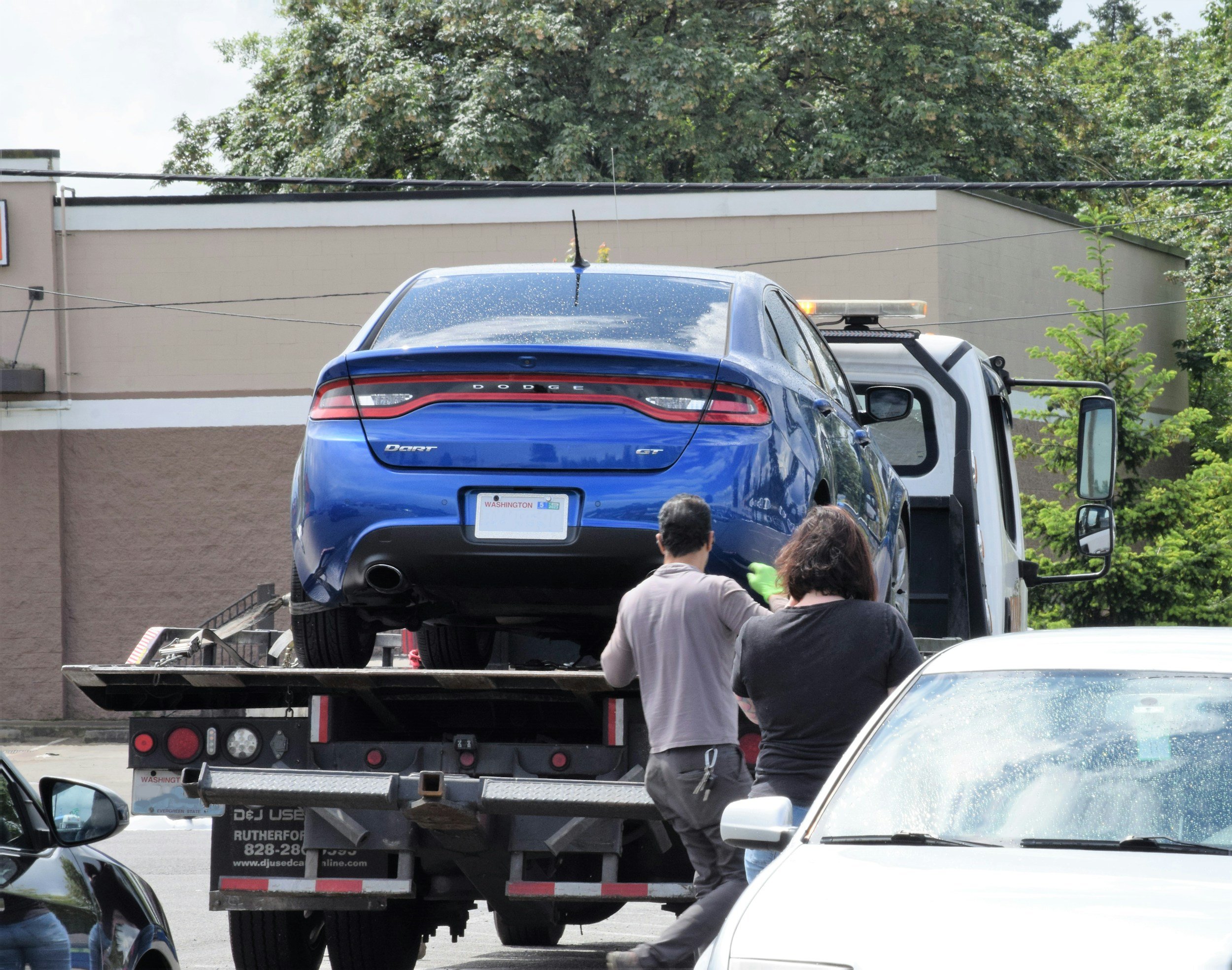
  • Flatbed Tows: Essential for All-Wheel-Drive (AWD), 4WD vehicles, electric vehicles (EVs), and luxury/low-clearance cars to protect your drivetrain from severe damage. A flatbed usually carries a slight premium - adding roughly $25 - $50 to the local base cost or an extra $0.50 - $1.00 per kilometre.
4. Ontario-Specific Considerations

Ontario introduced the Towing and Storage Safety and Enforcement Act (TSSEA) to crack down on predatory roadside towing practices. Under this framework:

  • Maximum Rate Schedules: Licensed tow operators must file and publish their maximum rates with the Ministry of Transportation. They can charge less than these posted rates, but they cannot legally charge more.

  • Right to Choose: Except in designated provincial tow zones (like parts of the 400-series highways where emergency clearways apply), you have the right to choose where your car is towed. Do not let a driver pressure you into taking your vehicle to an unapproved storage yard.

5. Smart Tips to Avoid Overpaying

  1. Check Your Coverage First: Before calling a commercial service, check if you have roadside assistance through CAA, your credit card benefits (many premium travel and rewards cards include 3 to 4 free tows a year), or your auto insurance policy.

  2. Weigh Distance vs. Preference: Every extra kilometre adds up fast. While you may love a specific mechanic across the province, towing a car 50 km further than necessary can easily add $150 to your bill.

  3. Ask for the Full Price Upfront: Never accept a vague estimate. Ask the dispatcher: "What is the exact base fee, what does it include, what is the per-kilometre charge, and what is your estimated total to my destination?"

  4. Get an Itemized Invoice: Ensure you receive a written or digital itemized breakdown before signing or paying, separating the hook-up fee, mileage, and any storage or administrative add-ons.

6. What to Do in a Roadside Emergency

1

Get to Safety

If you can, pull completely onto the shoulder or into a safe parking lot. Turn on your hazard lights. Stay inside your vehicle with your seatbelt fastened if you are stuck near active highway traffic.

2

Assess the Problem

Determine if you actually need a tow, or if a simple roadside fix—like a flat tire change, a battery boost, or fuel delivery—can get you back on the road safely.

3

Direct Your Vehicle to a Trusted Destination

If a tow is unavoidable, instruct the driver to take your vehicle straight to a repair shop you trust.


Looking for Honest Automotive Service in the Region?

If you are dealing with a sudden breakdown or mechanical failure in the region, getting your vehicle towed to a dependable team makes all the difference.

At Hansma Automotive, we believe in transparent communication, fair diagnostics, and quality repairs that get you back on the road safely and without stress.

Have questions about vehicle maintenance or need reliable local auto care?

Reach out to the Hansma team today.


“Had an issue with car kicking into anti-slip mode at the end of my workday and Hansma was very kind to provide me with a Loaner car so I could return home to Guelph after work. They promptly solved the issue the next day and got the car running smooth again for a good price. Very fair and honest dealership, one of the best around!”

— Will S
 

Car Overheating Causes Every Driver Should Know

Understanding the most common car overheating causes is your best defense against getting stranded on the side of the road.

Few things cause a driver's stomach to drop quite like seeing the temperature gauge needle spike into the red zone or noticing wisps of steam drifting from under the hood. An overheating engine is a time-sensitive emergency; continuing to drive even a few miles can turn a minor repair into a catastrophic financial loss.

  1. Primary Car Overheating Causes

  2. The Domino Effect: How Overheating Damages Your Engine

  3. Preventative Maintenance Tips

If you notice any of these overheating causes while driving your vehicle, book an appointment with Hansma Automotive today.


Key Takeaways

  • Act Immediately: If your car starts overheating, pull over safely and turn off the engine. Never ignore a rising temperature gauge.

  • Coolant is King: A vast majority of overheating issues stem from low coolant levels or system leaks.

  • Extreme Cost Risk: Ignoring an overheating engine can warp major internal components, resulting in repair bills that can easily scale past $2,000 to $4,000.

1. Primary Car Overheating Causes

Low Coolant Levels or Leaks

The fluid in the system is essential for carrying heat away. If you have a low coolant level, the system cannot absorb and transport the massive heat your engine produces.

Leaks can develop in:

  • the water pump

  • a split hose

  • the radiator core

  • the complex internal passageways.

If you find yourself frequently adding coolant, you have a leak that needs immediate repair.

Thermostat Failure

The thermostat is a temperature-sensitive gatekeeper. When you start your car, it remains closed to let the engine warm up. Once it reaches the correct temperature, it is supposed to open, allowing coolant to flow to the radiator.

If the thermostat gets stuck in the closed position, it traps the hot fluid within the engine block, causing it to rapidly boil over. This is a common and critical cause of immediate overheating.

Radiator Issues

A radiator must have a clear internal and external path. If the tiny tubes inside the radiator are clogged with sludge or corrosion, the liquid cannot pass through and be cooled.

Furthermore, the external metal fins can be bent, crushed, or blocked by road debris, which prevents air from passing through and cooling the fluid.

Cooling Fan Problems

Airflow is crucial. When your car is moving, the natural wind cools the radiator. However, when you are stopped in traffic, you rely entirely on an electric cooling fan to pull air through the radiator fins.

If the fan motor fails or a relay breaks, your engine will quickly overheat the moment you stop moving.


2. The Domino Effect: How Overheating Damages Your Engine

Ignoring an overheating problem is one of the most expensive mistakes a driver can make. Engine components are precisely engineered and operate at tight tolerances.

Extreme heat causes metal parts to expand beyond their limits, leading to catastrophic failure:

  • Stage 1 (Minor): High internal pressure bursts a radiator hose, leading to a visible 'steam cloud.'

    • Cost: Low (hoses are cheap).

  • Stage 2 (Moderate): Intense heat warps the cylinder head and causes the metal head gasket to crack, or 'blow.' This leaks coolant into your oil.

    • Cost: Significant ($1,500 - $3,000+).

  • Stage 3 (Severe): The warped head cracks completely, and the pistons swell inside the cylinders, locking up or 'seizing' the engine. At this point, the engine is often beyond repair.

    • Cost: Catastrophic (often requires a full engine replacement, from $3,000 to over $5,000).

3. Preventative Maintenance Tips to Avoid Overheating

Protect your engine and your wallet with regular maintenance:

  • Regularly Check Coolant Levels: Visually inspect your coolant reservoir tank (the transparent overflow jug). Make sure the fluid is between the 'MIN' and 'MAX' lines. Only top this off when the engine is completely cold.

  • Flush and Replace Coolant: Over time, coolant degrades, becomes acidic, and leads to corrosion inside your engine. Consult your owner’s manual for the recommended interval (e.g., every 50,000 miles or five years) to flush the old fluid and replace it with new coolant.

  • Inspect All Hoses: During routine maintenance, squeeze the main radiator hoses. If they feel overly stiff, are showing visible cracks, or are unusually soft and spongy, replace them before they fail under pressure.

  • Watch Your Driveway: If you notice a bright orange, green, or pink puddle forming under your car, you likely have a coolant leak. Do not ignore it.


Don't Wait for the Steam - Protect Your Engine Today!

An overheating engine can transform a routine drive into an expensive nightmare in a matter of minutes. The best time to deal with a cooling system failure is before you are stranded on the shoulder of the highway.

Take Action Now:

  • Pop the Hood This Weekend: Once your engine is completely cool, check your coolant reservoir. If it's below the "Full" line, top it off with the manufacturer-recommended fluid.

  • Schedule a Cooling System Inspection: If you haven’t had your coolant flushed in the last 30,000 to 50,000 miles—or if you've noticed a mysterious puddle under your car—book an appointment with a trusted mechanic today.

Got a road trip coming up or noticed your temperature gauge creeping up?

Contact us today to book an appointment.


“This is the best place to go for repairs, everyone is very helpful. All my family members go to Hansma.Thanks again for looking so well after my car.”
— Anne Dedman
 

Car Has No Power? Common Causes and What to Check First

If a vehicle feels sluggish when merging onto a highway or struggles to climb even small hills, it is often described as having no power. Essentially, this means the engine isn't producing the expected energy even when the gas pedal is pressed firmly.

Understanding why a car has no power is the first step toward getting back to peak performance and avoiding a breakdown.

  1. What It Means For a Car to Lack Power

  2. Car Has No Power: Common Causes

  3. Serious Warning Signs

If your car has no power and a basic inspection of the air filter doesn't show a clear culprit, schedule a diagnostic test today.


Key Takeaways

  • Airflow is Vital: A dirty air filter is the easiest and cheapest fix for a car that feels sluggish.

  • Fuel Matters: Stuttering during acceleration is often a sign of a clogged fuel filter or dirty injectors.

  • Sensor Sabotage: If your car is stalling at stoplights or jerking, a dirty Mass Air Flow (MAF) sensor is a likely culprit.

  • Exhaust Backpressure: If you hear a hissing sound or feel intense heat from under the car, your exhaust may be blocked.

  • RPM vs. Speed: If your engine revs loudly but you aren't gaining speed, your transmission is likely slipping.

  • Don't Ignore the Light: A flashing check engine light requires an immediate stop to prevent permanent engine damage.

1. What It Means For a Car to Lack Power

When a car has no power, the internal combustion process is being interrupted. To move your car, the engine performs a precise series of moves: it sucks in air, mixes it with a fine mist of fuel, compresses that mixture, and ignites it with a spark.

Lack of power occurs when this cycle is inefficient. You might experience:

  • hesitation (a delay between pressing the pedal and the car moving),

  • sluggishness (taking a long time to reach highway speeds),

  • or misfiring (the engine stumbling or vibrating).

It essentially means the energy being created in the cylinders isn't enough to overcome the weight and friction of the vehicle


2. Car Has No Power: Common Causes

Restricted Airflow (The Engine Can't Breathe)

Internal combustion engines are essentially large air pumps. If the air can't get in or the exhaust can't get out, power drops significantly.

  • The Air Filter: Over time, filters collect dust, pollen, and debris. A heavily clogged filter starves the engine of oxygen, making the fuel-to-air ratio too rich.

  • The Catalytic Converter: This part of your exhaust cleans gases before they exit. If it becomes clogged (often from engine oil or unburnt fuel), it creates backpressure. It’s like trying to run a marathon while exhaling through a straw.

Fuel System Obstructions (The Engine Can't Eat)

If the engine is breathing fine but isn't getting enough food, it will lean out and lose strength.

  • Clogged Fuel Filter: This is designed to catch dirt from the gas tank. If it’s blocked, the fuel pump has to work harder, and the engine won't get enough gas during high-demand moments.

  • Dirty Fuel Injectors: These nozzles spray fuel in a fine mist. If they are gummed up with carbon deposits, the spray becomes a weak dribble, leading to poor combustion.

Failing Sensors (The Engine Is Confused)

Modern cars are managed by an Engine Control Unit (ECU). It relies on sensors to know how much fuel to spray.

  • Mass Air Flow (MAF) Sensor: This sits in the intake and tells the computer exactly how much air is entering. If it's dirty, the computer guesses the fuel amount, usually resulting in a massive drop in power.

  • Oxygen (O2) Sensors: These monitor the exhaust. If they fail, the car may enter a fail-safe mode that prioritizes protecting the engine over providing speed.

Transmission Issues (The Energy Isn't Moving)

Sometimes the engine produces plenty of power, but it gets lost on the way to the tires.

  • Slipping Clutch or Torque Converter: If the components that connect the engine to the wheels are worn out, the engine will spin fast (high RPMs), but the car will barely move.

  • Old Transmission Fluid: Low or dirty fluid can prevent the car from shifting into the correct gear, leaving you stuck in a low power gear range.

 
Potential Issue Primary Symptom Severity Recommended Action
Dirty Air Filter Sluggishness; dark exhaust Low Replace filter (DIY friendly)
Clogged Fuel Filter Stuttering at high speeds Medium Replace filter during next service
Bad MAF Sensor Sudden stalling; jerky starts Medium Clean or replace sensor
Clogged Exhaust Hissing sound; poor acceleration High Professional exhaust inspection
Slipping Transmission High RPMs with no speed High Check fluid levels immediately

3. serious Warning Signs

It is important to distinguish between a tired car and a dying car. Watch for these red flags:

  • Flashing Check Engine Light: A solid light is a warning; a flashing light is an emergency. It usually means a misfire is occurring that can destroy your catalytic converter in minutes.

  • Limp Mode: This is a software state where the car limits you to a low gear and low RPMs to prevent the engine from blowing up.

  • Excessive Smoke: Black smoke indicates too much fuel; blue smoke indicates burning oil; white smoke suggests a head gasket leak.

  • Metallic Tapping: If the loss of power is accompanied by a "knock" or "ping," stop driving immediately.

Most power loss issues require a professional touch for two reasons: Equipment and Prevention.

  1. Diagnostic Tools: A professional mechanic uses an OBD-II scanner that provides real-time data from your sensors. This prevents "parts cannon" repairs—where you spend hundreds of dollars replacing parts that aren't actually broken.

  2. Safety: Issues like a failing transmission or a clogged catalytic converter can cause the car to stall unexpectedly in traffic, which is a major safety risk.

Catching a failing sensor today can prevent a multi-thousand-dollar engine or transmission rebuild tomorrow.


Car Has No Power? Give Us a Call.

Don’t let a sluggish engine compromise your safety or your schedule.

\While a minor loss of performance might seem like a small annoyance today, it is often the early warning sign of a much larger mechanical failure. Taking action now - whether it's a simple air filter swap or a professional diagnostic scan - can restore that new car feel and save you from the stress of an unexpected breakdown.

If your car has no power, head to your trusted local mechanic this week to pinpoint the cause and get your vehicle back to its peak performance.

Ready to book your Diagnostic?


“Honest, Reliable,& Excellent Service!
Easy Online Self Appointment Booking - pick up date, ask for a courtesy car, add notes! Highly Recommend! Book Early Spots Fill Up Quickly.”
— Jean Dawson
 

RPM Gauge Not Working: What To Do

Your RPM (revolutions per minute) gauge is a key part of your vehicle’s dashboard, helping you monitor engine performance and shift gears at the right time. When it stops working, it can be frustrating and even risky if left unaddressed. In this guide, we’ll walk you through the most common causes and solutions so you can get back on the road with confidence.